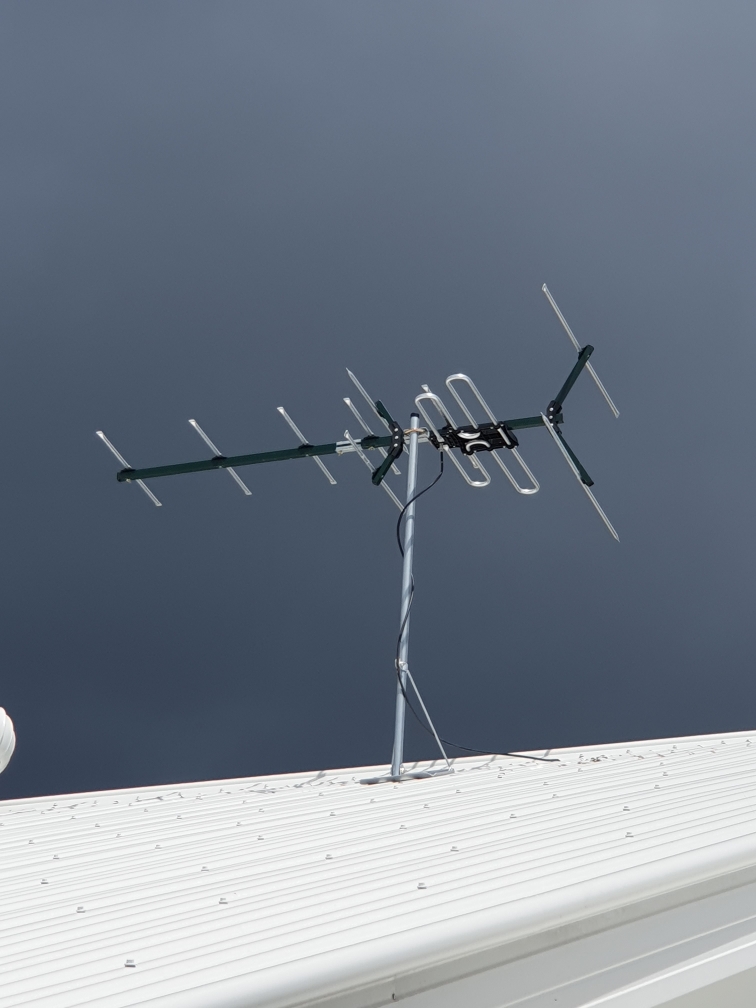
The Complete Guide to TV Antenna Installation on the Gold Coast
A good TV antenna installation is one of those jobs that looks simple from the ground and turns out to be anything but. Get the antenna type, position and cabling right and you'll enjoy crystal-clear digital reception on every channel for a decade or more. Get any one of them wrong and you're left with pixelating pictures, channels that drop out during storms, and a repeat call-out. This guide walks through what actually goes into a proper install here on the Gold Coast, so you know what to look for whether you're doing it yourself or hiring a pro.
Why the Gold Coast is its own challenge
Reception here isn't uniform. Most of the region is served by transmitters on Mount Tamborine and from Brisbane, and the terrain between you and those towers makes all the difference. Homes down in the valleys around Nerang, Mudgeeraba and the hinterland can sit in genuine signal black-spots, while high-set houses on the coast may pick up strong but reflected signals that cause "ghosting" and dropouts. Salt air near the beaches also corrodes cheap hardware faster than most people expect. That's why there's no single antenna that's right for every Gold Coast home — the correct choice depends on your exact address.
Choosing the right antenna
For our region you're almost always looking at a quality VHF/UHF combination antenna. The key decisions are:
- Gain — how much signal the antenna gathers. Weak-signal areas in the hinterland need a higher-gain antenna than a strong-signal beachside suburb.
- Directionality — a directional antenna aimed precisely at the transmitter rejects interference and reflections far better than a cheap omnidirectional one.
- Build quality — marine-grade brackets and UV-stable fittings are worth it near the coast, where corrosion is the number-one killer of older installs.
Position is everything
The single biggest factor in reception quality is where the antenna sits. Higher is usually better, but the real goal is a clear line toward the transmitter with as few obstructions — trees, neighbouring rooflines, water tanks — as possible. A professional installer uses a signal meter on the roof to test several positions and aims the antenna for the strongest, cleanest reading rather than just bolting it to the nearest point. On acreage and rural blocks, that sometimes means a mast or pole mount to clear the tree line.
Cabling and connections
Even a perfectly aimed antenna is let down by poor cabling. Quality dual-shielded coaxial cable, properly weather-sealed connections at the antenna, and a tidy run into the roof cavity all protect the signal on its way to your TV. If you're feeding multiple rooms, a correctly specified distribution amplifier keeps every outlet strong — the wrong booster, or one added to compensate for a bad antenna, often makes reception worse rather than better.
Repair or replace?
Not every reception problem needs a new antenna. Often the culprit is a corroded connection, a perished cable, a failed masthead amplifier or an antenna that's simply been knocked out of alignment by wind. A good technician diagnoses the actual fault before quoting — sometimes a $150 repair solves what looked like a full replacement. As a rough guide, if your antenna is more than 12–15 years old, showing rust, or you're chasing recurring faults, replacement is usually the more economical long-term fix.
What to expect from a professional install
A proper job on the Gold Coast should include a signal assessment at your property, the right antenna for your location, secure and corrosion-resistant mounting, tidy weather-sealed cabling, testing of every channel and outlet before the technician leaves, and a workmanship guarantee. If you'd like that done properly the first time, we're licensed local installers covering the entire Gold Coast and hinterland — request a free quote or call 0450 451 584 and we'll take care of it.